



 OFFERS
Instagram is one of the most widely used social media platforms out there, with millions of users who dedicate their days to sharing the most amazing photos, videos, and Reels. One of the many features Instagram offers is the ability to repost content of other accounts onto your Story, feed, or Reels. This is a fabulous way to spread the word on content creators you enjoy or even on the content you enjoy. There will be situations when you may want to revoke some of the content you have reposted, and this is referred to as unreposting. Knowing how to unrepost ensures your Instagram is perfectly manicured with only content you deem worth displaying.
What Exactly Is It to Unrepost on Instagram?
Unreposting means to delete or take down posts that you have ingested from another social account. Some characteristics could be:
- Stories that you have reposted from other users
- Feed posts that were shared after using repost applications
- Reels that were reshared from other creators
By the exercise of unreposting, the content disappears from your profile and also from your followers’ feed, but it has no bearing on the original post by the creator; it also expires as far as the consequences of any deletion of its original content provided by you. It includes only shared content, not content that was initially yours.
Why You May Have a Reason to Unrepost on Instagram
There are several cogent reasons why it can be harmful to repost on Instagram:
- Content no longer fits your brand: If you genuinely would not be having much call for it today, your reposted content would have strayed rather far from your profile’s theme and message; thus, it helps to stay consistent by removing it.
- Accidental reposts: Let’s be honest, it would not be surprising for a post to be reposted by mistake, and unreposting solved that there and then.
- Stale reposts: Letting a repost grow old may render it obsolete or less interesting.
- Privacy/copyright concerns: If a repost were done informally, it would take away your protection from disciplinary actions.
Keeping your Instagram feed clean and professional is a fundamental goal, so this kind of contemplation can be a real moving force behind the thoughtful act of unreposting.
How to Instagram on Unrepost Stories
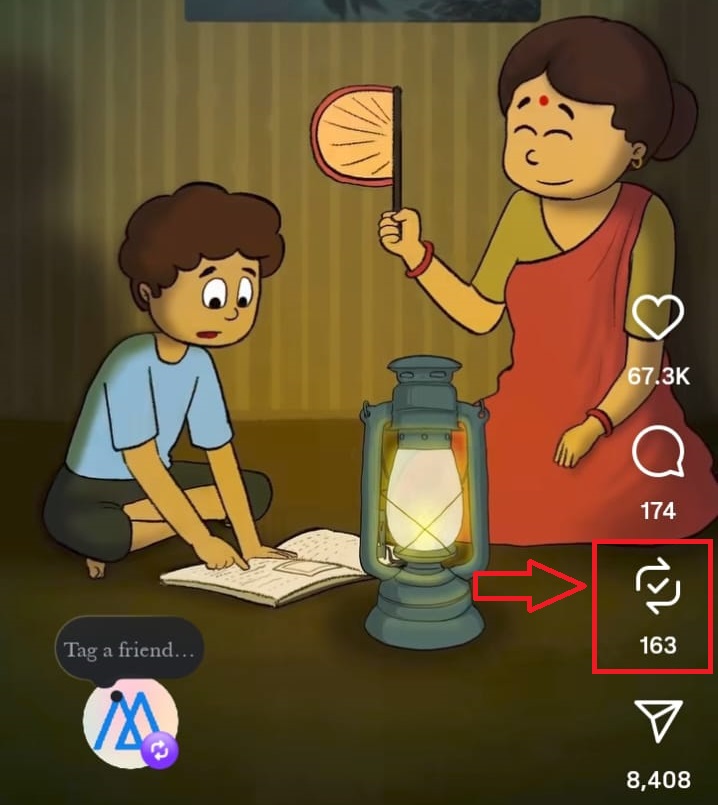
To remove a reposted story is quite simple:
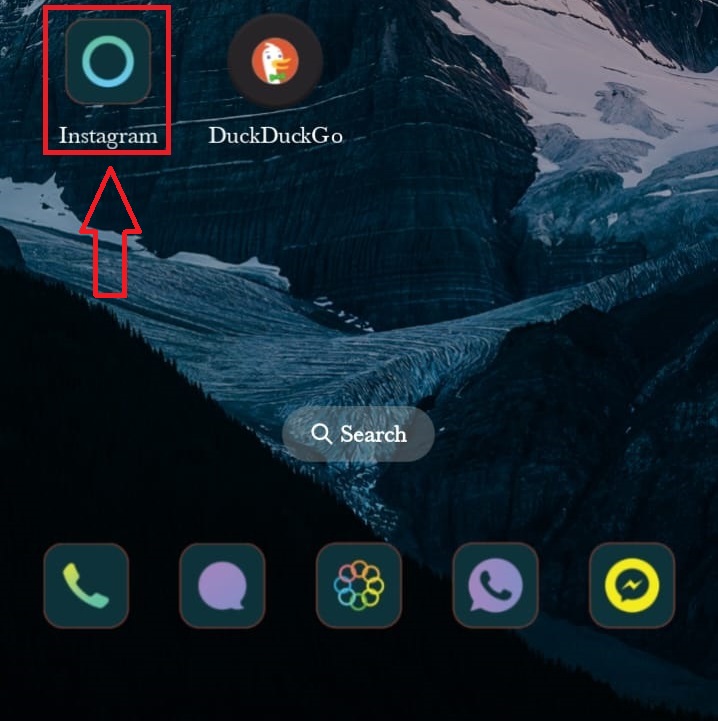
You open your Instagram app.
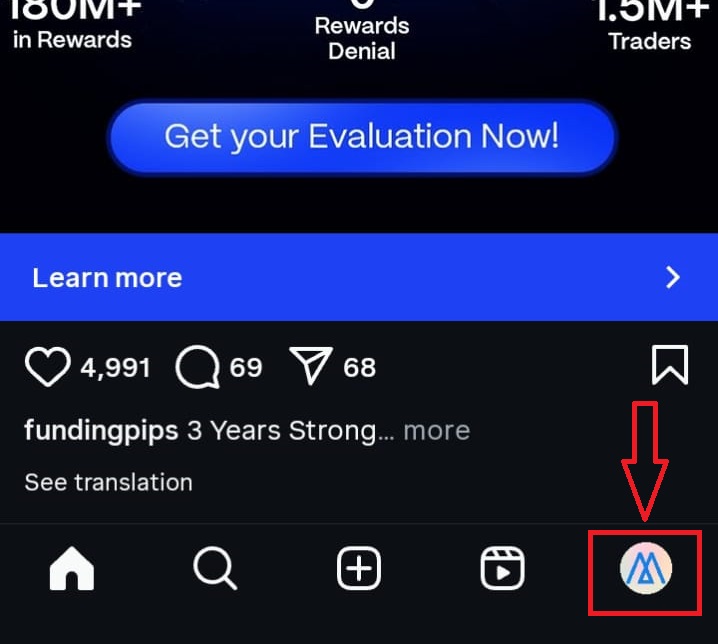
Go to the profile section.
Go to the three-dot menu.
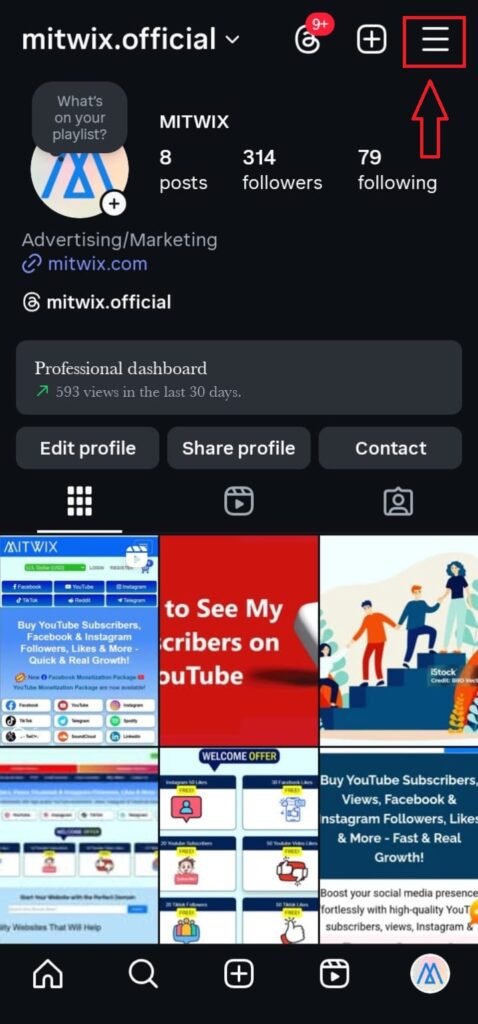
Click the Repost.
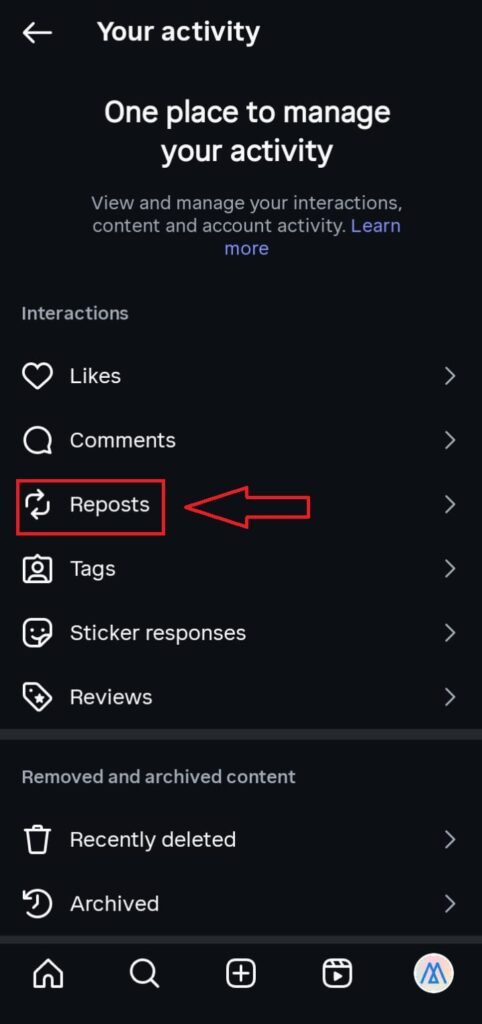
Scroll to the Story slide you want to remove.
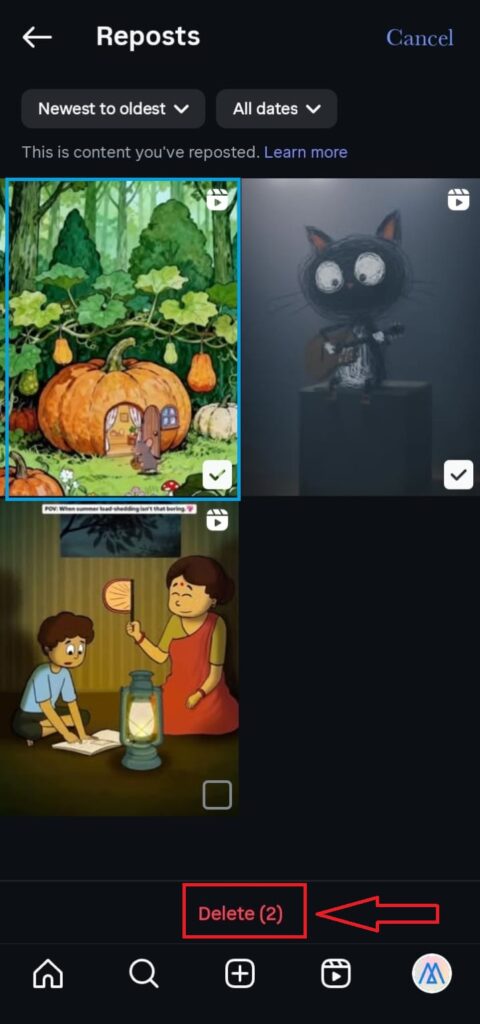
Select Delete and confirm.
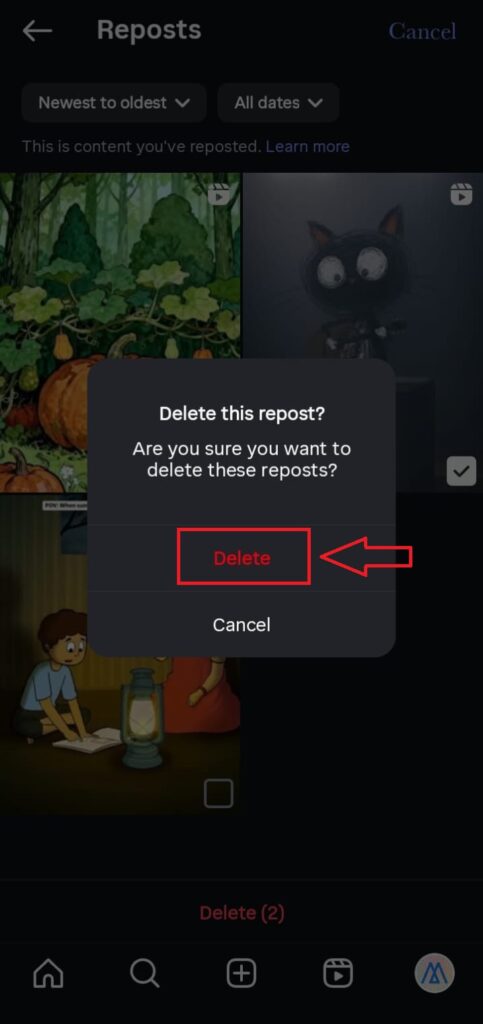
Notes: Deleting a story means it disappears off your profile and that of your followers immediately. It affects only you; your deletion does not affect the story originally posted by the creator.
How Soon After a Repost Can I ‘Unrepost’?
Absolutely! When you delete a reposted story, feed post, or reel, it disappears immediately from your profile. However, any likes, comments, or shares that go with the repost will also leave your Instagram profile. Deleting a repost does not impact the original post in the creator’s account. This basically means that you can advance back to fixing the error, or you can forward delete anything from your profile that no longer works for you, without casting effect on the original creator.
Common Questions About Reposting on Instagram
Can I unrepost multiple items at once?
No. For every unrepost on Instagram, it requires you to delete the reposted Story/post/Reel one by one.
Do followers get notified?
No. Followers will not be notified if you unrepost on Instagram.
Will unreposting affect Instagram statistics?
Yes. Any engagement metrics related to the reposted content will be removed from your account stats.
Is unreposting permanent?
Yes. Once deleted, the repost disappears permanently from your profile.
Final Thoughts
With a finger on the pulse, you will constantly review reposts against your mind for what has been put out and how it is sure to affect your engagement; thus, your Instagram profile highly reflects your brand and personality. Unreposting comes in handy for Instagram users who want an organized and curated feed while better protecting their image and restricting stated content to that which they, in fact, approve.